
Steps for adding a Jira integration
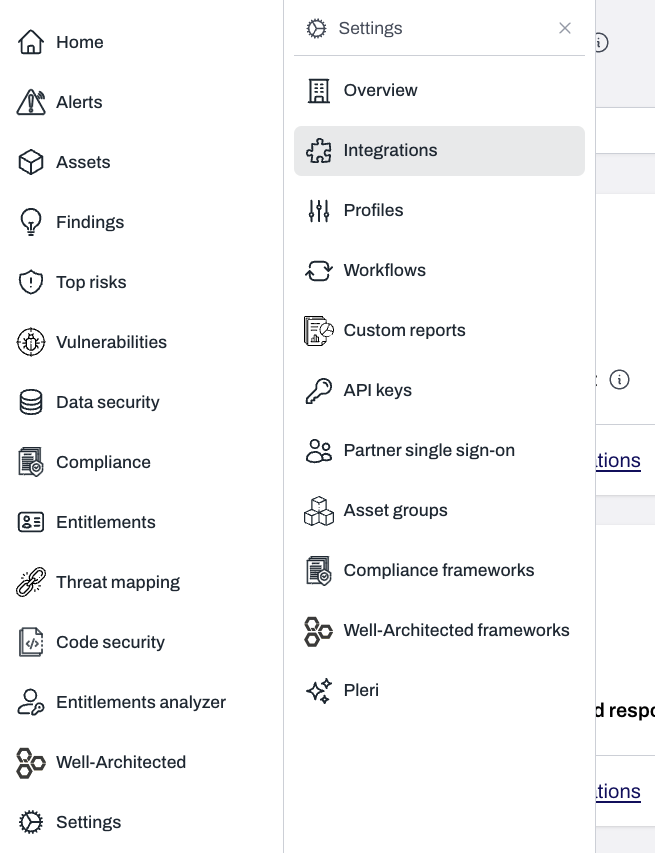
On the Plerion dashboard, go to Settings > Integrations
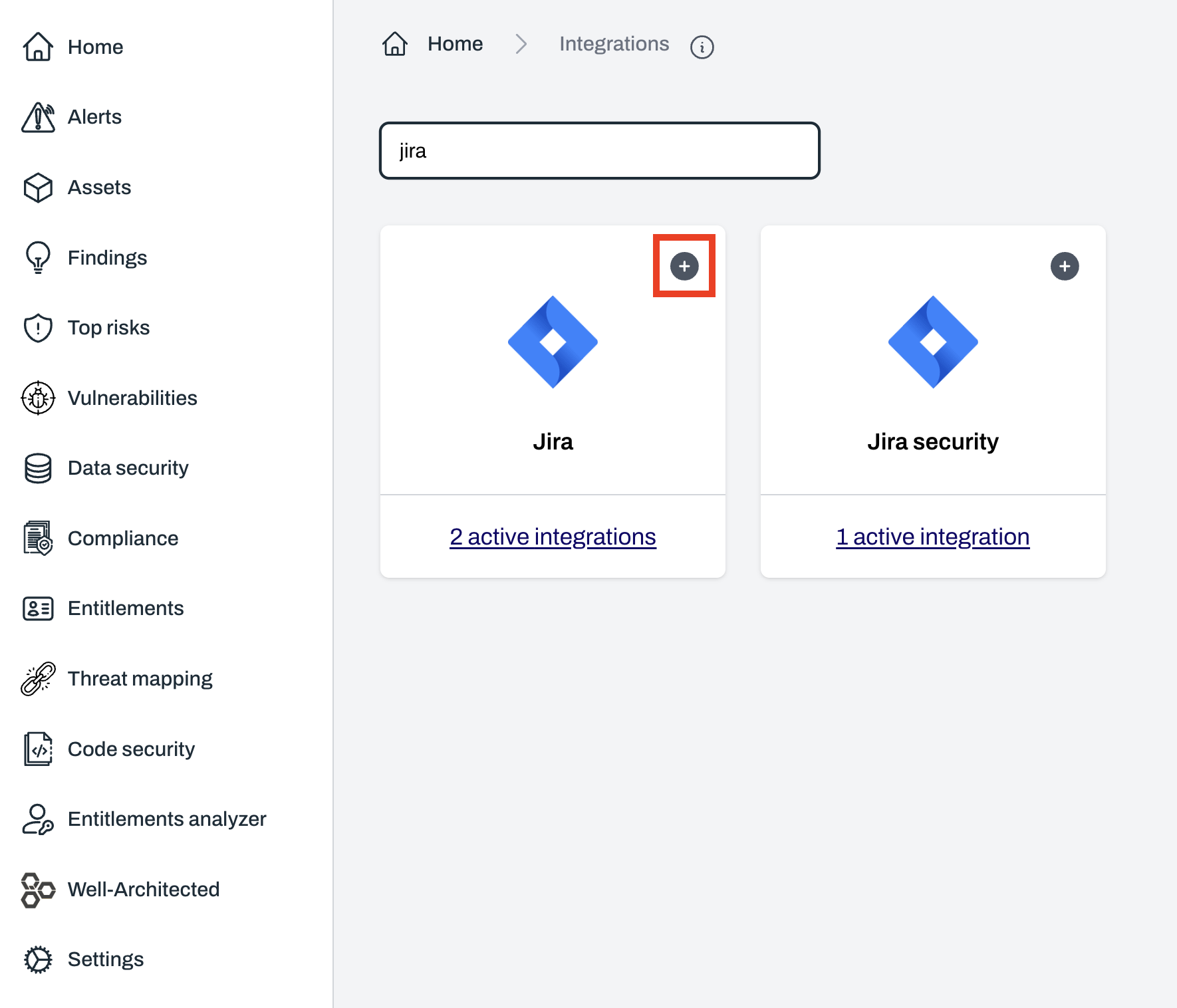
Find Jira and click the + button
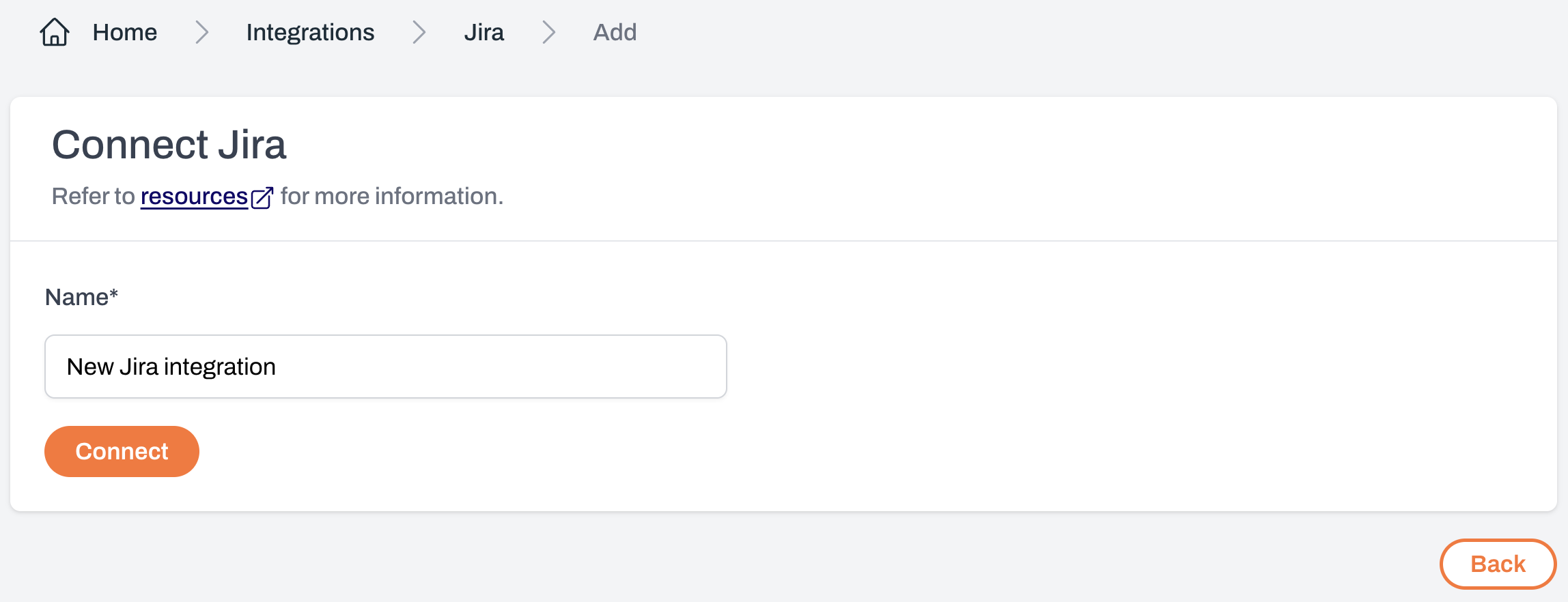
On the Connect Jira page, enter a name for your integration and select Connect Jira
A Jira OAuth pop-up will appear
Accept to authorize the connection.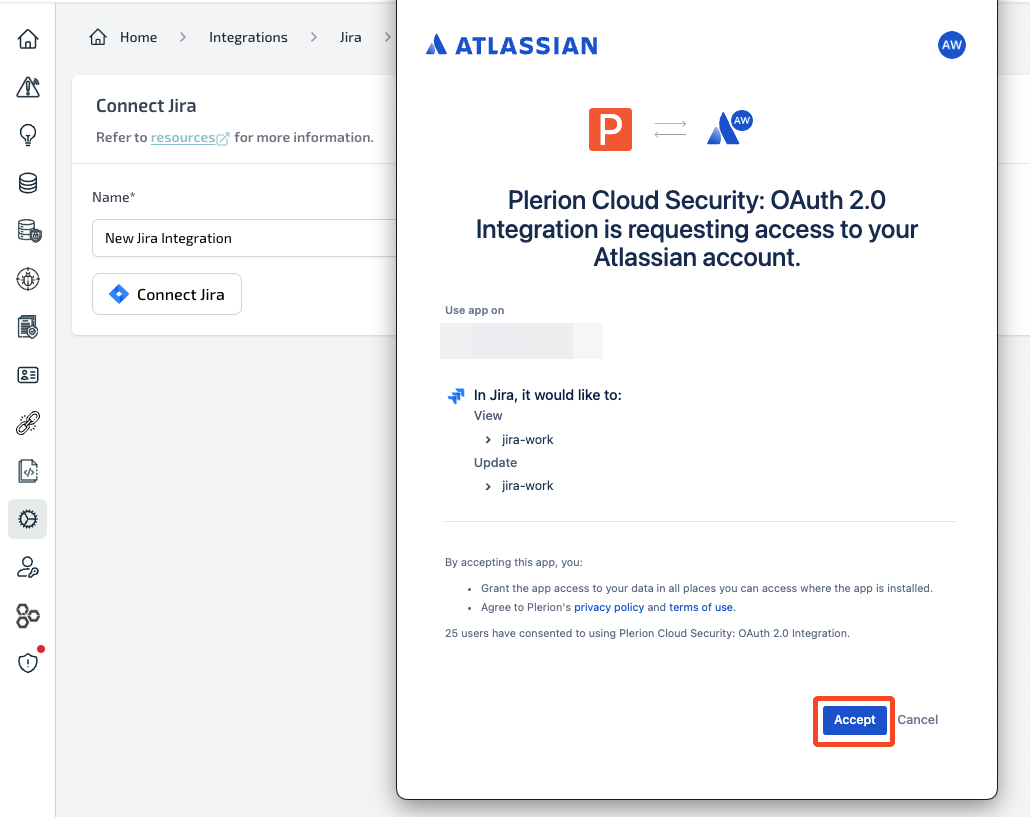
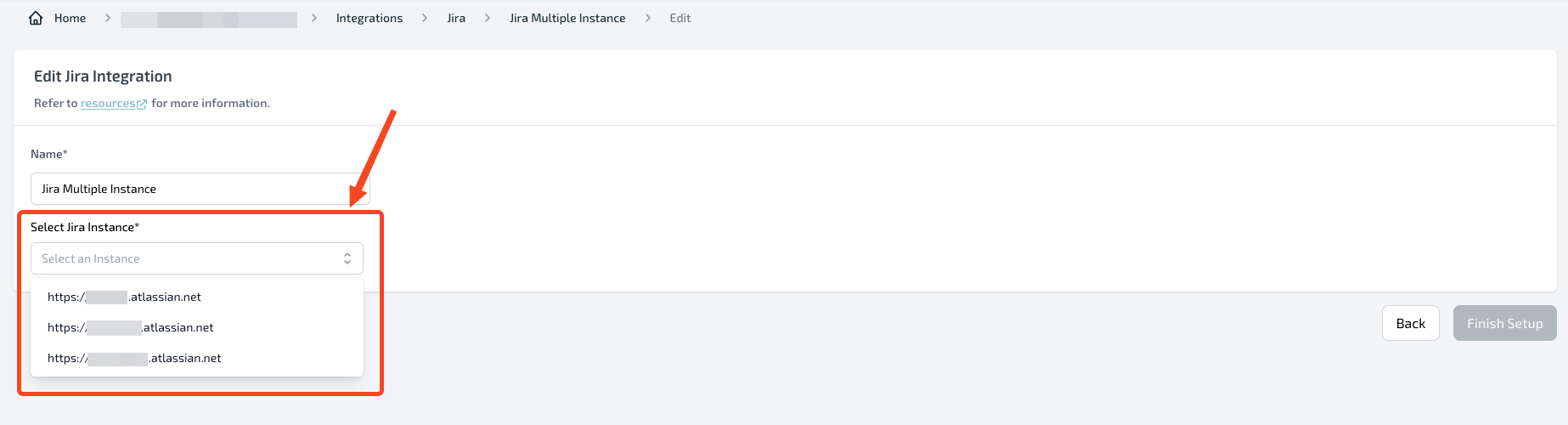
Choose Jira instance (if applicable)
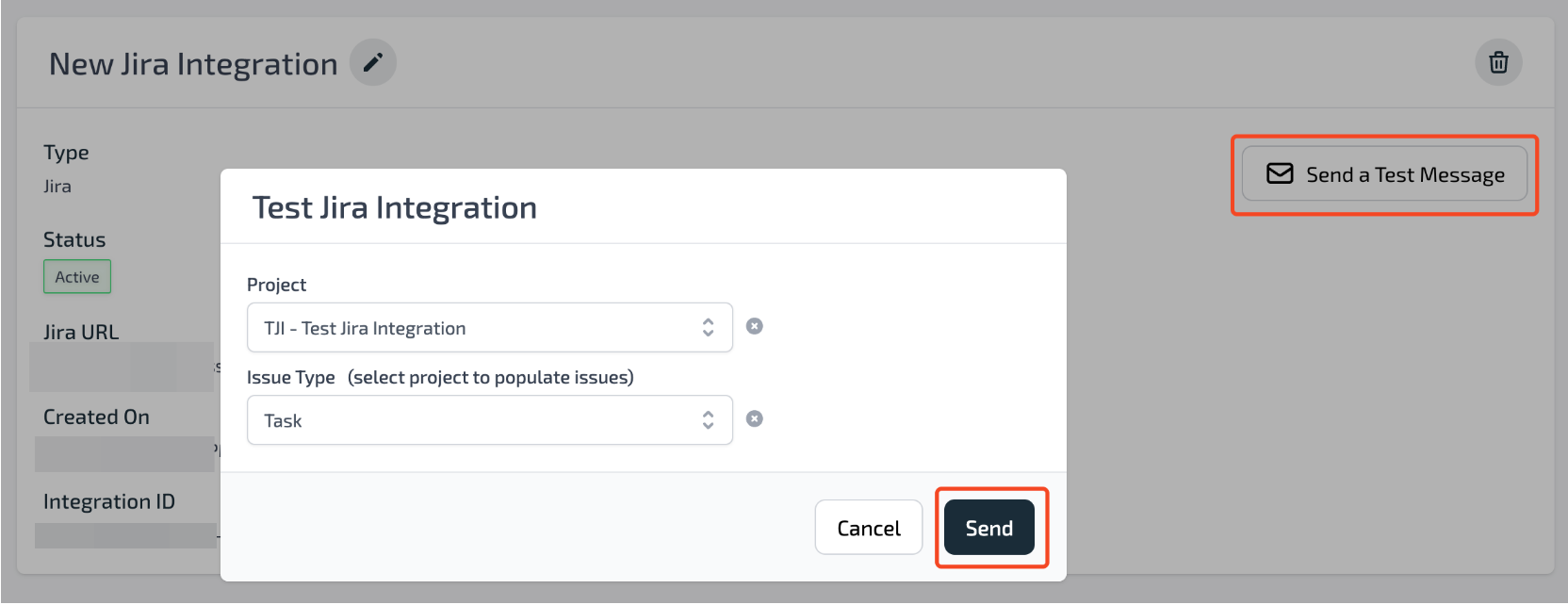
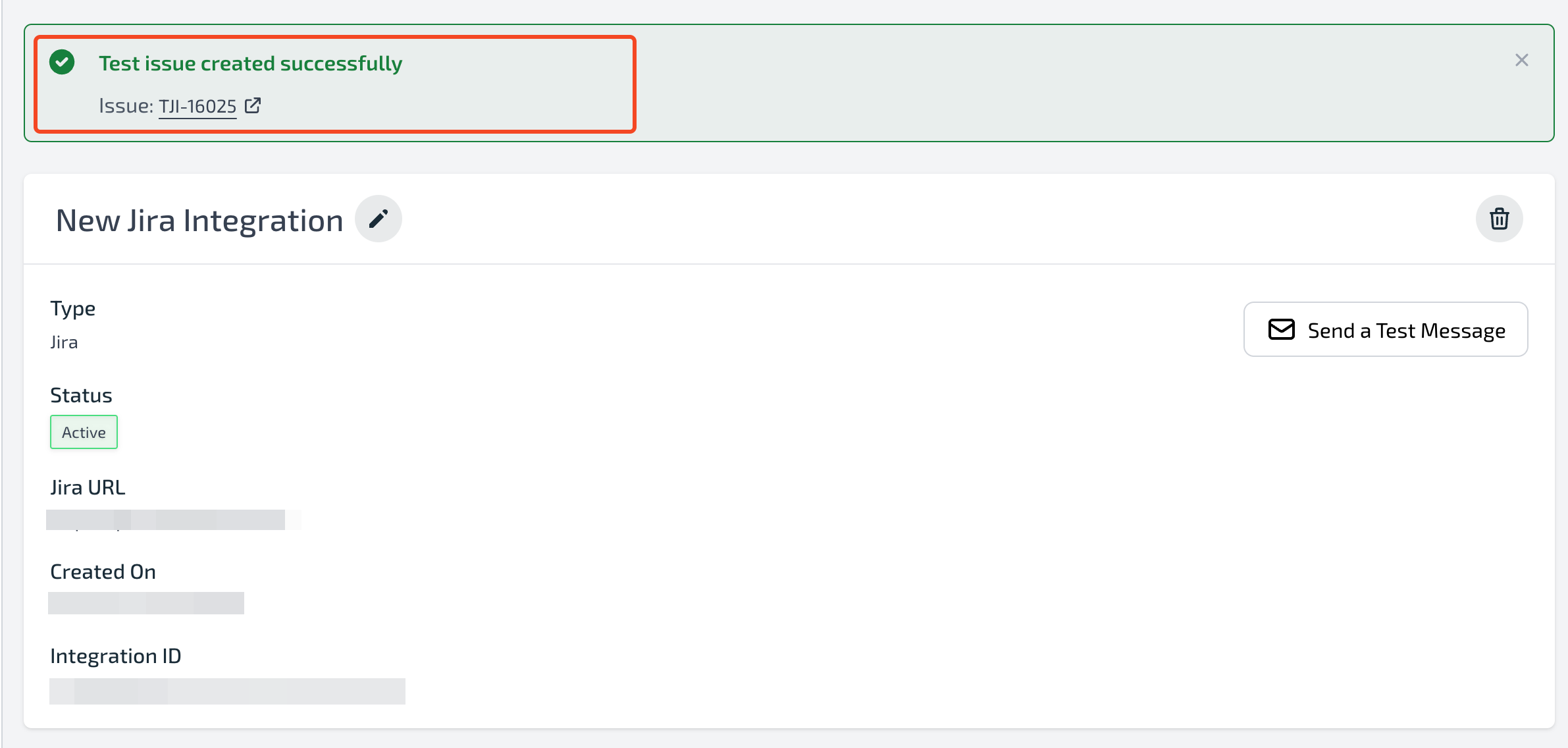
Test your Jira integration
Choose the Jira project and issue type for the test issue.
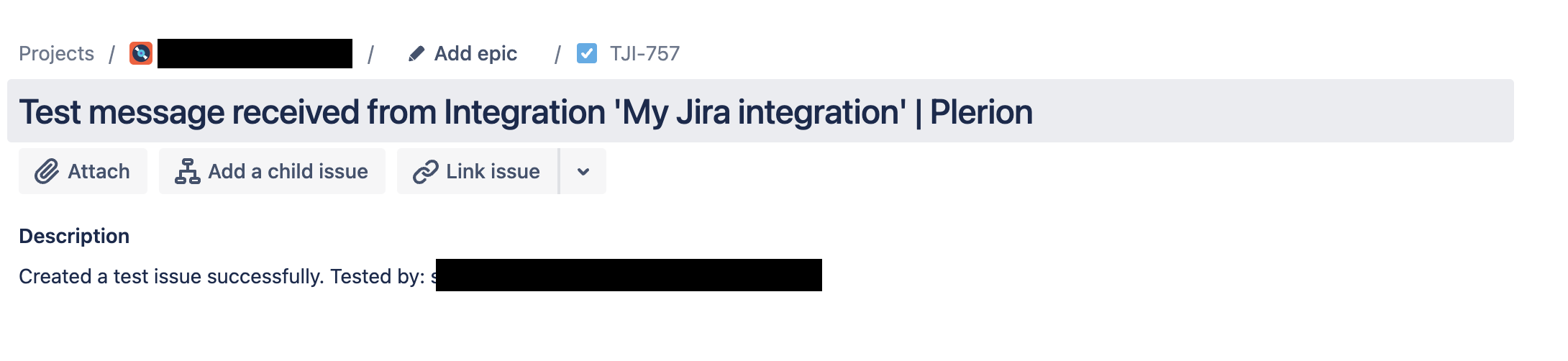
Review your test issue in Jira
Create a workflow on Plerion
After adding the Jira integration, you must create a workflow for any alerts to be sent to Jira.Go to Settings > Workflows and click Add a new workflow
Enter workflow details
Add workflow conditions
- Under Conditions, you can build the workflow using any of the three available condition categories:
- Asset
- Findings
- Vulnerabilities
Add workflow actions
Add action and select your Jira integration.Add your Jira project, issue type and resolved status. To set more fields on each issue, such as Priority or Assignee, see Map Jira fields.
Save the workflow
Save to finish setting up your workflow.Map Jira fields
With Field mapping in a workflow’s Jira action, you can fill in the fields of every issue Plerion creates, either from a Plerion field or from a fixed value. The fields on offer come from the Jira create screen of the project and issue type you select in the action, so select those first.Fields you can set
Plerion offers every field you can set on that create screen:- Built-in fields: Priority, Labels, Components, Assignee, Reporter, Due date, Fix versions, Affects versions, Environment, Parent and Security level.
- Custom fields: text, number, date, date-time, single select, multi-select, checkboxes, labels and user picker fields.
- Jira Service Management: the Organizations field.
Steps to map a field
Go to Settings > Workflows and open your workflow
Open the Jira action and select a project and issue type
Under Field mapping, click Add
Select the Jira field
Choose where the value comes from
- Plerion field: the value comes from the alert. Choose the field under Plerion fields.
- Fixed value: every issue gets the same value.
- Days after creation: shown instead of Fixed value for date and date-time fields. Enter a whole number of days from 0 to 3650, and Plerion sets the date that many days after the issue is created.
Enter the value
Click Save
Save to save the workflow. You can send a test issue first to check the mapping.Fixed value inputs
32. If the field asks you to reconnect Jira, see Update Jira permissions.
Map severity to a Jira value
When you set a single-choice Jira field, such as Priority, from a Plerion field that has a fixed set of values, the row expands into a table. Severity is that kind of field: for each of its values (Critical, High, Medium, Low and Informational), pick the Jira value to send. Map at least one value. A severity left as Not sent sends nothing, so Jira’s default for the field applies. Plerion works out the severity of an alert as follows:- Finding alerts: the severity of the finding.
- Vulnerability alerts: the severity level of the vulnerability.
- Other alerts: a band of the asset’s risk score.
Required fields
When you select a project and issue type, Plerion adds a row for every field Jira requires on the create screen, unless Jira has a default for it or your custom JSON already sets it. These rows are marked Required, can’t be removed, and need a value before you can save the workflow. If you change the project or issue type, Plerion clears your field mappings and adds the required fields for the new project and issue type. Your custom JSON is kept.Add custom JSON
Tick Add custom JSON to send Jira fields the list doesn’t offer, such as a cascading select. Enter a JSON object keyed by Jira field ID:- Keys are Jira field IDs, such as
customfield_10004orlabels. project,issuetype,summaryanddescriptionaren’t allowed. Plerion sets these itself.- A field a row already sets isn’t allowed. Set each field in one place only.
- At most 50 fields, 8 KB in total, and nested at most 5 levels deep.
When Plerion sets each field
- When the issue is created: Plerion sends every row and the custom JSON.
- When the alert changes later: Plerion sends only the rows set from a Plerion field, including severity tables, along with the summary and description. Fixed values, days after creation and custom JSON aren’t sent again, so changes your team makes to those fields in Jira stay in place.
Send a test issue
ClickSend test issue below the field mapping to create one real issue in Jira from a sample alert. The test uses the whole mapping as it is on screen, including changes you haven’t saved yet.
- The button is available once a project and issue type are selected and the mapping has no errors.
- The test issue’s summary starts with
[Plerion test]and it has the labelplerion-test. - If Jira creates the issue, Test issue created appears with a link to it.
- If Jira rejects the issue, Jira rejected the test issue appears. Jira’s message for a field shows next to that field’s row, and any other messages are listed under the heading.
Example: share issues with a customer organization and set priority from severity
This example uses a Jira Service Management project whose service desk has an organization called Acme. Under Field mapping:- Add a row for Organizations, choose Fixed value, then search for and select Acme.
- Add a row for Priority, choose Plerion field, then select Severity and fill in the table:
- Click
Send test issueand check the new issue in Jira. - Click
Save.
Update Jira permissions
Picking organizations by name needs the latest Jira permissions. Jira integrations connected before this feature show anUpdate permissions button on the integration page. The integration stays Active and keeps sending alerts until you update.
Go to Settings > Integrations and open your Jira integration
Click Update permissions
Approve the Atlassian consent screen
Accept.