
Creating and editing dashboards requires organization or tenant administrator permissions.
Steps to build a dashboard
1
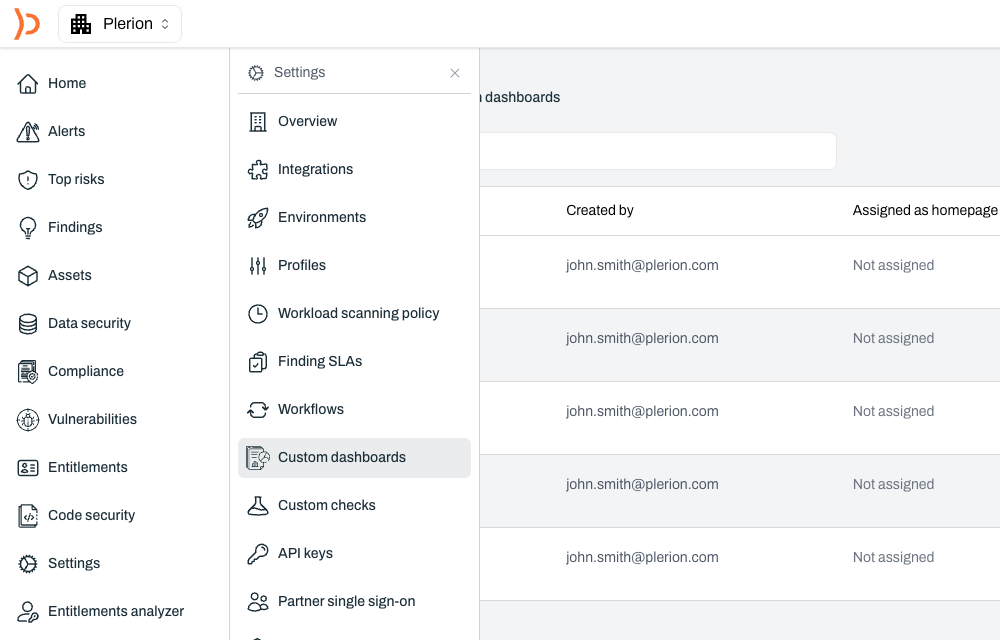
Go to Settings > Custom dashboards
2
Click Create custom dashboard
Plerion creates the dashboard immediately and opens the editor.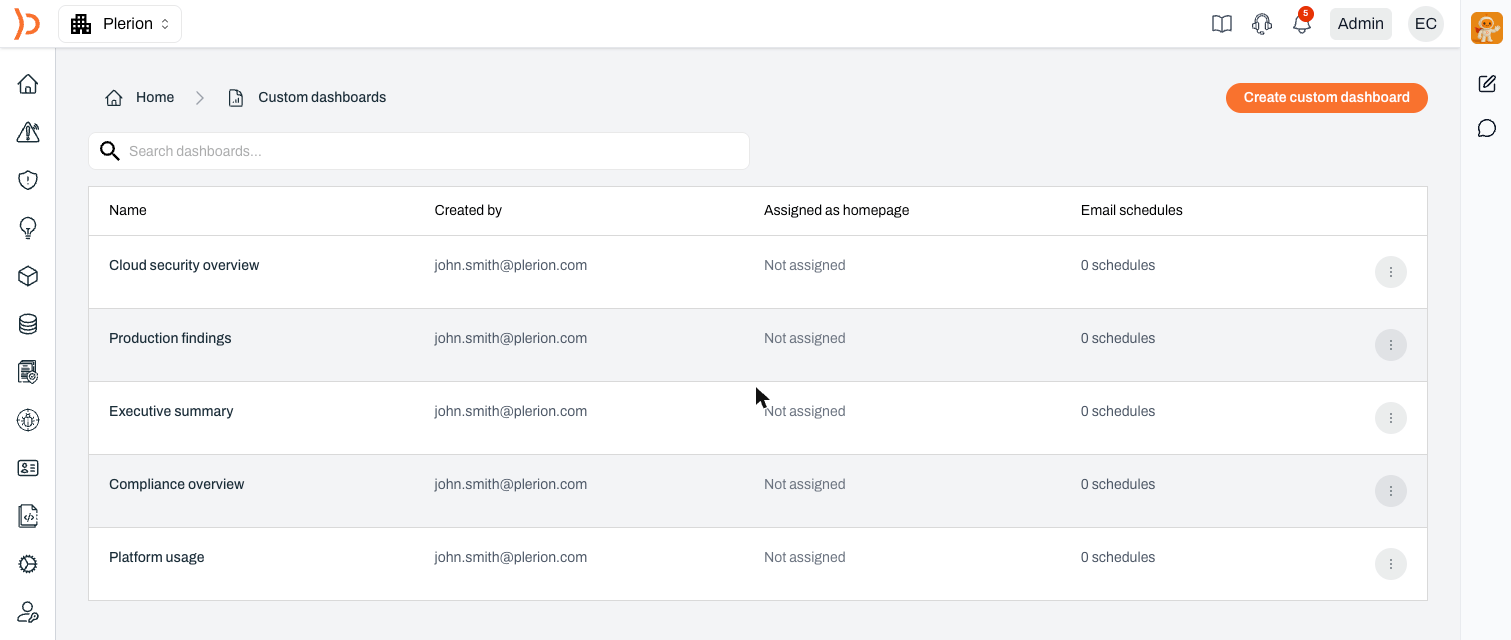
3
Name the dashboard
- The cursor starts in the name field. Type a name and press
Enter. - To rename it later, click the name in the breadcrumb, or the pencil beside it.
- Names are limited to 64 characters.
4
Add a ready-made widget
The widget panel opens with the dashboard. Click any widget to add it, or drag it to a position on the canvas.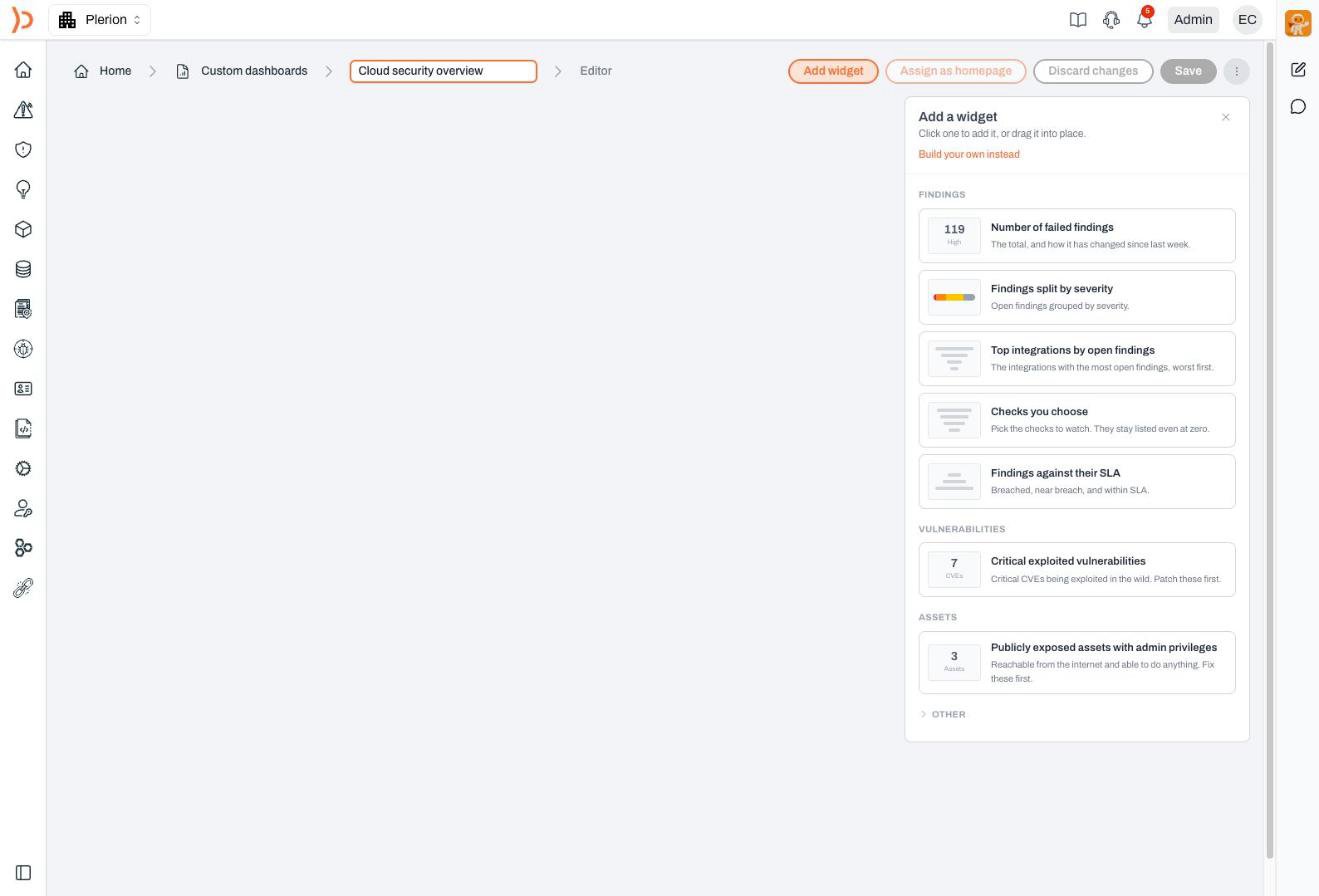
- Widgets are grouped by subject:
Findings,Vulnerabilities,Assets, andOther. - The
Othergroup starts collapsed. It holdsSummary,Risk score,Focus here, andA block of text. - The panel stays open, so you can add several in a row.
5
Build a widget from scratch
Click 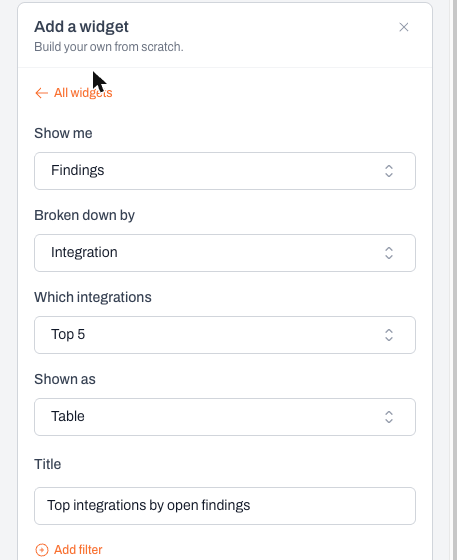
Build your own instead at the top of the panel, then fill in each field:Use
Add filter to narrow the widget. Click Add widget at the foot of the panel when you are done.6
Arrange the canvas
Drag a widget by its header to move it. Drag any edge or corner to resize it. A dashboard holds up to 10 widgets.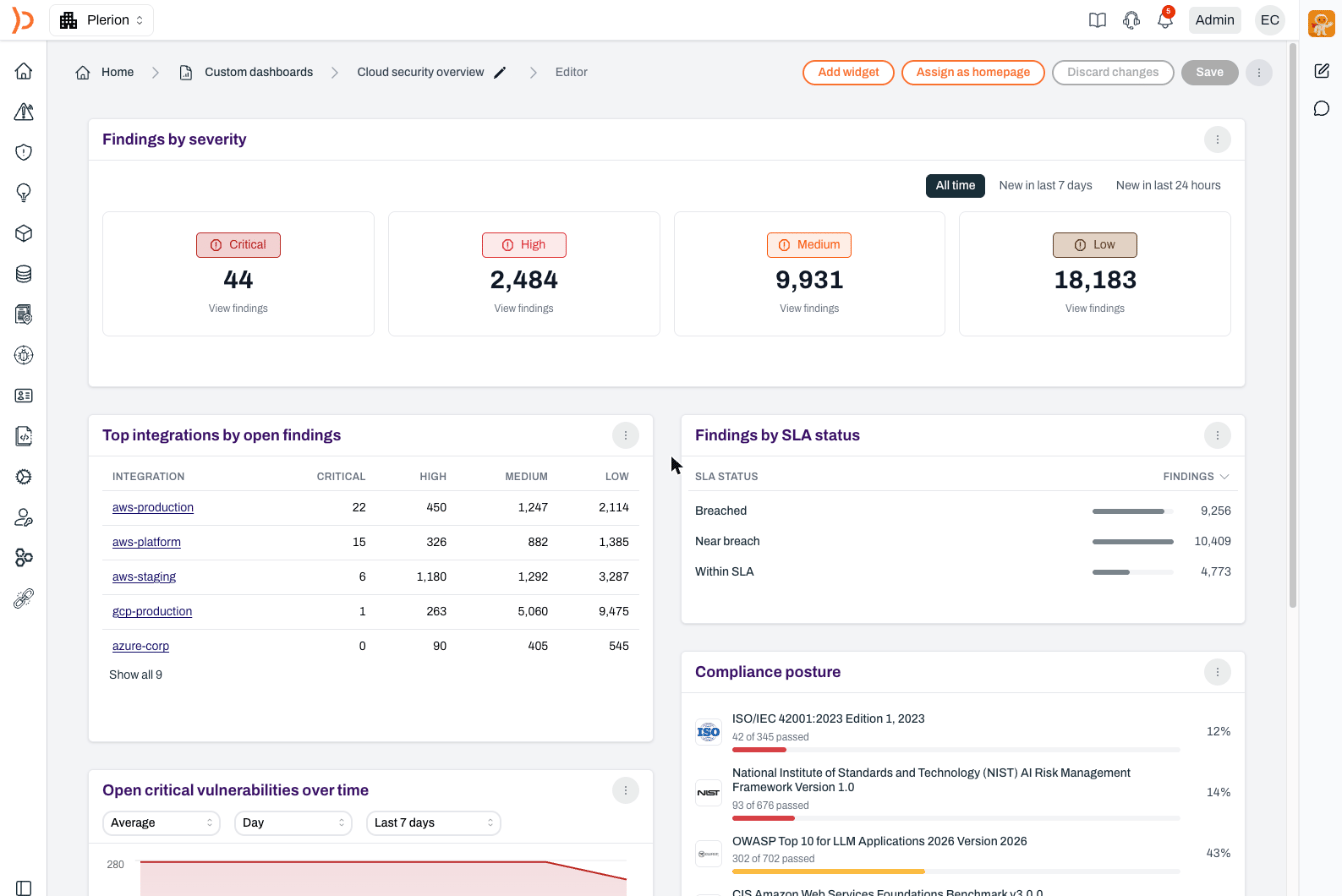
7
Click Save
Nothing is kept until you save.
Discard changes discards everything since the last save.Change a widget
Click the kebab menu (⋮) on a widget and select Edit. The panel reopens on that widget’s settings, and every change appears on the canvas as you make it.
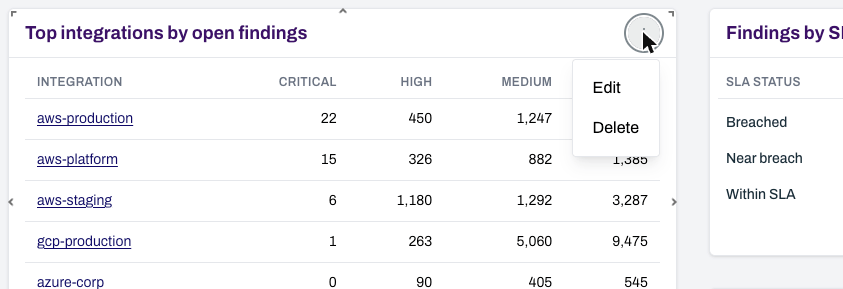
Delete removes the widget from the canvas, but the removal is not applied until you save. Discard changes brings the widget back.
The Summary and Risk score widgets store no settings, so editing them changes the title only.
Steps to set a dashboard as a homepage
1
Click Assign as homepage
The button is disabled while the dashboard is unsaved or empty. Hovering it shows which:
Save first or Add a widget first.2
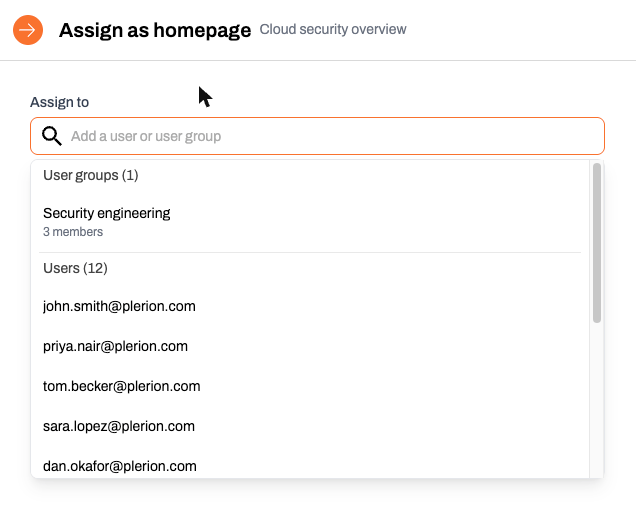
Add users and user groups
- Search by name in the
Assign tofield. - Users and user groups are listed separately, and each user group shows its member count.
- Changes save as you make them. There is no save button on this panel.
Profile > Home dashboard.
Steps to email a dashboard on a schedule
1
Open the kebab menu in the editor and select Email schedule
Save the dashboard first. The item is disabled while there are unsaved changes.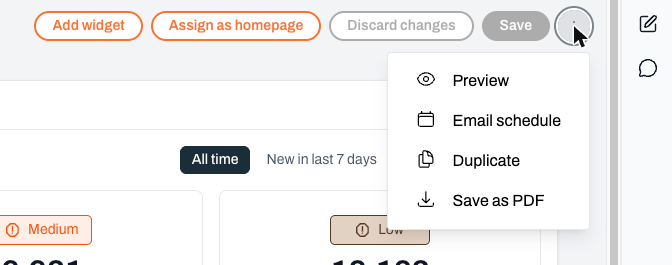
2
Set up the schedule
- Send to: the email integration to deliver to.
- Every:
Day,Week, orMonth. - On: the weekday, or the day of the month. Monthly schedules offer days 1 to 28 only, so a short month never skips a delivery.
- At: the time of day.
Add schedule for more, up to 10 per dashboard. Click Save schedule.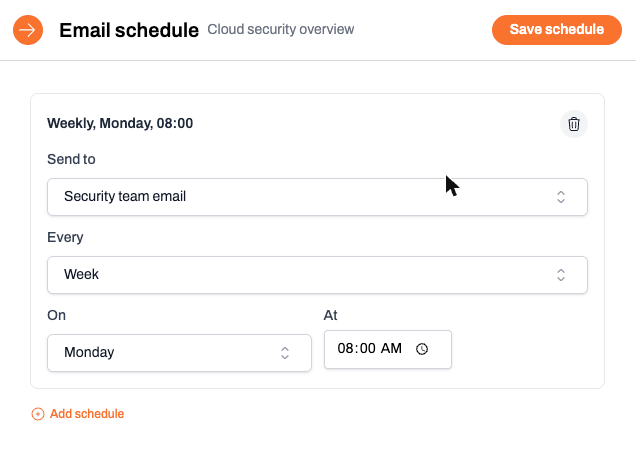
Other actions
From the dashboards list
Open the kebab menu (⋮) on a row:
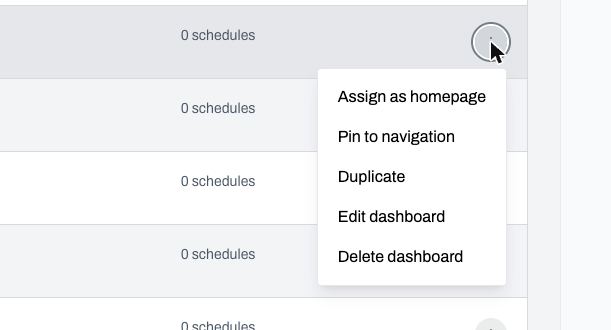
- Pin to navigation adds the dashboard to your own side navigation. Other users are not affected.
- Duplicate copies the dashboard and opens the copy.
- Delete dashboard asks you to confirm, and tells you first if anyone has it as their homepage.
From the editor
Open the kebab menu (⋮) beside Save:
- Preview shows the dashboard as a viewer sees it.
- Save as PDF exports the canvas. Findings tables are trimmed to 10 rows in the export.